Moving from evaluating basic fence materials to finalizing your procurement requires a distinct shift in focus. You must look beyond simple aesthetics to evaluate structural integrity and physical lifespan. A truly successful installation relies on robust materials performing reliably well over decades.
Choosing the wrong composite material carries heavy operational risks. Subpar boards often face severe warping, drastic color fading, or catastrophic wind-load failures during intense weather events. Property managers and homeowners alike suffer greatly when inadequate fencing fails prematurely. Conversely, correctly specifying an engineered system prevents these costly physical failures. It guarantees lasting durability across multiple harsh seasons.
This guide provides a realistic, evidence-based framework for evaluating modern fencing products. We will explore how to match structural specifications directly to your unique site realities. You will understand how environmental stress directly impacts long-term material performance. Finally, you will learn exactly how to shortlist the right vendor for your specific project needs. Proper vetting ensures your project finishes on time and performs beautifully.
Key Takeaways
- Application Dictates Specs: Wind exposure, climate, and privacy needs must drive the selection of board thickness and post reinforcement, not just initial price.
- Material Generations Matter: Co-extruded (capped) WPC composite fences offer significantly higher UV and moisture resistance than first-generation uncapped alternatives.
- Supplier Vetting is Crucial: A reliable composite fence supplier provides transparent warranty terms, verifiable testing data, and consistent manufacturing standards.
Assessing Your Application: Success Criteria & Site Realities
Before buying materials, establish what a successful installation looks like physically. Define your project requirements based on strict environmental realities. A robust composite fence must endure constant exposure to local elements. You cannot apply a one-size-fits-all approach to exterior architectural features.
Environmental & Climate Factors
UV exposure heavily dictates your material choice. High-sun environments require advanced UV inhibitors built directly into the manufacturing process. They also demand capped technologies to prevent surface chalking and fading over time. Continuous solar radiation breaks down inferior plastics rapidly. Ignoring local UV index ratings remains a common mistake that leads to premature material degradation.
Moisture and humidity levels present another major environmental challenge. Coastal or high-rainfall areas necessitate materials featuring highly resilient polymer ratios. These specific material blends actively prevent internal swelling and structural decay. Constant rain exposure constantly tests the water-absorption limits of any exterior board. Furthermore, coastal environments introduce salt spray, which demands highly non-corrosive exterior barriers to prevent microscopic pitting.
Structural & Privacy Requirements
Wind load demands vary heavily by geographic region. Commercial applications and high-wind residential zones require reinforced support structures. You must use aluminum or steel post inserts to prevent snapping during heavy gusts. Standard materials bow and flex dangerously under constant high wind pressure.
Your design intent also impacts structural choices significantly. Full-privacy interlocking boards catch significantly more wind. They act like solid sails during a violent storm. Semi-privacy slatted designs allow air to pass through freely, dramatically reducing structural stress. These physical differences fundamentally change your support requirements. Always calculate the specific wind resistance needed before finalizing your panel style.
Critical Composite Fence Specifications You Must Evaluate
Do not rely on basic marketing claims when planning a project. You must evaluate the actual physical and chemical properties of the material itself. Carefully reviewing core composite fence specifications ensures lasting performance. Knowing exactly how to read a technical data sheet separates successful projects from eventual failures.
Understanding WPC Ratios
A highly durable wpc fence relies on an optimized material blend. WPC stands for Wood-Plastic Composite. The ideal board balances two main components perfectly to achieve lasting stability. Recycled wood fibers provide essential structural rigidity and natural aesthetics. High-density polyethylene or advanced polymers deliver vital moisture resistance and flexibility.
If the wood ratio goes too high, boards absorb excess water and swell predictably. If the polymer ratio climbs too high, panels become overly flexible and look completely artificial. The best manufacturers maintain a strict, proprietary blend to balance these opposing material traits perfectly. Industry best practices suggest looking for established ratios, often hovering around 60% wood fiber and 40% polymers and additives, to guarantee structural integrity.
Uncapped vs. Capped (Co-extruded) Profiles
Understanding generation differences is crucial for long-term project success. First-generation uncapped boards lack an outer protective layer. They remain vulnerable to staining, scratching, and aggressive mold growth in damp climates.
Modern co-extruded boards feature a specialized protective polymer shield. Manufacturers extrude this impenetrable shield simultaneously alongside the inner core material. This capping technology serves as a non-negotiable specification for true longevity. It aggressively repels stains, resists deep scratches, and blocks severe UV damage. Never compromise on capping if you want a reliable, low-maintenance experience. Watch out for cheap brands where the capping layer easily delaminates from the core over time.
Core Density and Board Thickness
You must understand how to read material weights properly. Manufacturers measure this specific metric in weight per linear foot. Dense boards feel substantial and resist daily impacts effortlessly.
Follow these practical evaluation steps when reviewing options:
- Check the exact board thickness listed on the technical specification sheet.
- Identify whether the profile uses a hollow or solid core structure.
- Compare the overall weight metrics against local wind impact requirements.
- Request physical cut samples to inspect the uniformity of the inner core.
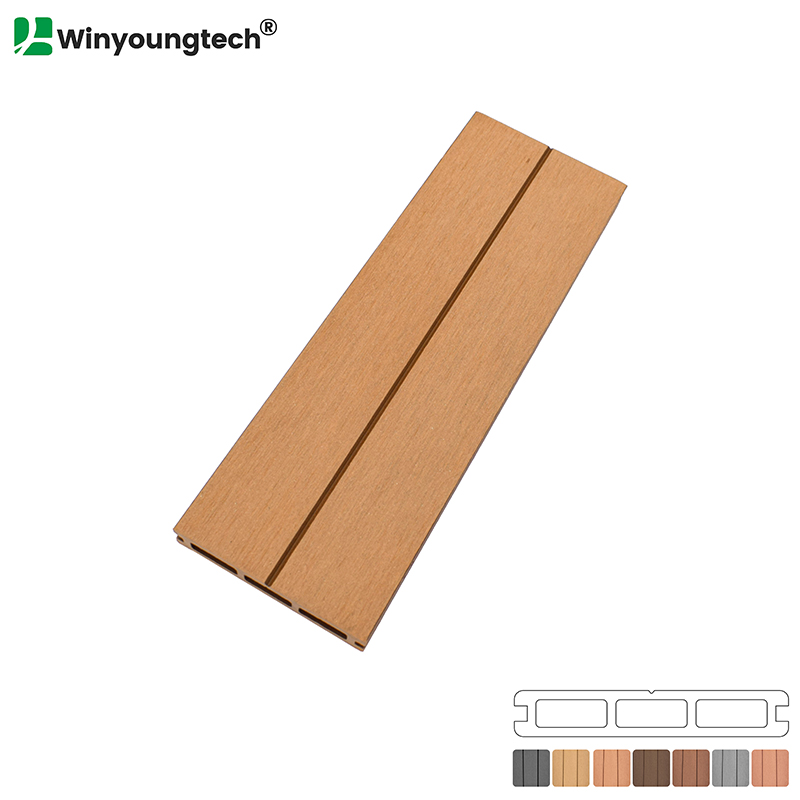
Solid core profiles offer superior impact resistance against flying debris. Hollow profiles reduce overall shipping weight but require much thicker outer walls to maintain proper structural strength under pressure.
WPC Fence vs. PVC and Wood: A Lifecycle Durability Lens
We must compare material lifespans objectively. Composite fencing requires a higher upfront material commitment. However, it delivers unmatched long-term value through sheer physical durability. Understanding these physical differences helps justify the initial procurement strategy.
WPC vs. Traditional Wood
Traditional wood demands constant attention over a standard ten-year lifespan. Owners must scrape, stain, seal, and replace warped boards frequently. Labor efforts quickly multiply as wood ages in harsh exterior environments. Conversely, a modern wpc composite fence requires zero intensive maintenance. A simple wash keeps it looking pristine year after year.
Performance differences are striking in the field. Wood suffers from structural rot from the inside out. It remains highly susceptible to termite damage and fungal decay. Splintering degrades the visual appeal and safety rapidly. WPC entirely eliminates these physical vulnerabilities, offering total peace of mind for property owners.
WPC vs. PVC/Vinyl
PVC offers complete moisture resistance, making it popular for basic applications. However, environmental temperature changes expose its main structural weakness. PVC becomes highly brittle in freezing temperatures. It cracks easily under sudden physical impacts, like a stray baseball or flying lawnmower debris.
WPC offers much better temperature-fluctuation stability. It retains high structural integrity during harsh winter freezes and scorching summer heatwaves. Furthermore, composite materials deliver a more authentic, non-glossy aesthetic. PVC often looks overly artificial and shiny in premium landscape designs. WPC mimics the natural matte grain of real timber beautifully.
Material Performance Comparison Chart
| Material Type | Moisture Resistance | Cold Weather Performance | Routine Maintenance Level | Aesthetic Finish |
| Traditional Wood | Low (requires constant sealing) | Moderate (can warp/split) | Very High (staining, sealing, replacing) | Natural but degrades quickly |
| PVC / Vinyl | Very High (waterproof) | Poor (becomes highly brittle) | Low (washing only) | Artificial, highly glossy |
| Capped WPC Composite | Very High (impervious shield) | Excellent (retains flexibility) | Zero (washing only) | Authentic, matte wood grain |
Implementation Considerations and Installation Risks
Rolling out a large fencing project involves distinct physical realities on the ground. Understanding field implementation builds necessary trustworthiness into your project plan. Anticipating installation challenges prevents costly mid-project redesigns and frustrating delays.
Thermal Expansion & Contraction
Composite materials expand and contract constantly. This represents an unavoidable physical reality for all dense plastics. Temperature shifts cause boards to grow in the heat and shrink in the cold.
Engineered bracket systems accommodate this natural movement safely. Installers must leave proper gap tolerances during construction. Ignoring these specific expansion gaps directly causes severe board warping and structural buckling. Always consult the manufacturer's specific temperature-gap chart before cutting any panels. A common mistake involves installing boards tight against the posts during winter, leading to catastrophic buckling when summer arrives.
Post Framework Integration
Many installers try reusing traditional wooden posts to save digging time. This presents a massive structural risk. Heavy composite boards require stable, unyielding support structures. Wooden posts rot underground over time, weakening the entire fence line. Their lifespan rarely matches the extreme longevity of modern composite panels.
We advocate strongly for dedicated aluminum posts. Steel-reinforced sleeves slipped over existing concrete mounts also provide highly secure integration. These metal supports handle the weight and wind load effortlessly without ever warping.
Labor Realities
Interlocking composite panels technically speed up the physical installation phase. The tongue-and-groove design stacks quickly once the framework sits perfectly plumb. They lock together to form a solid, continuous barrier.
However, precision matters deeply during the initial layout. Post spacing is far less forgiving than traditional wood. If posts sit even half an inch off-center, rigid composite panels will not fit between the channels. Wood bends easily to cover minor layout mistakes. Composite panels demand absolute mathematical accuracy during framework setup. Warn your installation crew about this strict tolerance requirement before digging any holes or pouring concrete footings.
How to Vet a Reliable Composite Fence Supplier
Your project success depends heavily on your supply partner. Use this procurement checklist for shortlisting specialized vendors. It ensures product consistency and excellent post-sale support. A good supplier acts as a technical partner, not just a simple materials broker.
Quality Control & Certifications
Look strictly for ISO-certified manufacturing facilities when evaluating partners. These international certifications guarantee consistent material blending and rigorous extrusion standards. Demand standardized stress testing documents upfront before placing any orders. A quality supplier tests for severe wind resistance in certified labs. They also run heavy load-bearing tests on all structural brackets and aluminum rails. Ask to see the actual lab reports, not just slick marketing summaries.
Warranty Transparency
Always read the fine print carefully. A trustworthy composite fence supplier clearly outlines warranty conditions. They explain exactly what constitutes a manufacturing defect. They separate true structural defects from "normal weathering" expectations. Excellent warranties cover core structural integrity, splitting, splintering, and uncharacteristic fading. Avoid companies hiding behind vague language regarding local UV exposure limits.
Supply Chain & Lead Times
Material shortages frequently kill project timelines. Choose a supplier running robust inventory management systems. Consistent material availability prevents cascading project delays. This remains especially critical for commercial-scale rollouts requiring massive material volumes. Ask about their warehousing capacity and standard shipping routes to ensure they can handle your specific scale efficiently.
Conclusion
Choosing the perfect composite fence requires careful technical balancing. You must define your exact site realities first. Demand strict manufacturing specifications, especially advanced co-extrusion technology. Always model your choices around long-term physical durability instead of just focusing on upfront acquisition habits.
Take immediate action to narrow your options today:
- Request physical product samples from your shortlisted vendors.
- Assess the core density and protective capping quality firsthand.
- Review the technical testing data for local wind-load ratings.
- Map out your exact post-spacing requirements to prepare your installation crew properly.
Contact a specialized expert to review your specific project requirements. Request a detailed technical specification sheet to finalize your procurement strategy securely.
FAQ
Q: Do composite fences fade over time?
A: First-generation uncapped boards do experience slight weathering. However, modern capped composites feature a specialized protective polymer shell. This advanced co-extrusion process makes them incredibly colorfast. They resist harsh UV rays actively. They maintain their original aesthetic for decades without requiring ongoing staining or painting.
Q: How strong is a WPC composite fence against high winds?
A: The overall strength relies heavily on the post framework system. The boards themselves remain highly dense and impact-resistant. However, true wind resistance requires dedicated aluminum posts or internal steel reinforcements. When engineered properly, these systems withstand severe gale-force winds without snapping or bowing out of their channels.
Q: Can I use existing wooden posts to install composite fence panels?
A: We strongly caution against reusing old wooden posts. Wood and composite materials have vastly mismatched lifespans. Wood eventually rots below the soil line. It also struggles to support the heavy weight of solid composite boards safely. Always use dedicated engineered metal posts for permanent structural safety.
Q: What is the standard lead time when ordering from a commercial composite fence supplier?
A: Lead times vary based on the specific order size. Standard inventory usually ships within a few short weeks. Custom bulk orders for commercial projects often require extended manufacturing time. Always set realistic expectations and communicate early with your vendor to avoid costly field installation delays.


