When customers ask us about wpc decking tiles, the question is rarely just “Do they look good?” The real worry is what happens after a few months outside—rainwater marks, dust, pollen, leaf tannins, barbecue oil, algae, or that stubborn gray film that seems to appear out of nowhere. Outdoor flooring lives a harder life than indoor floors, and maintenance habits often decide whether a space stays “inviting” or starts looking tired. From our perspective as a company that works with outdoor composite products every day, cleaning is not a side topic—it’s part of product selection. A surface that looks great but becomes stressful to maintain quickly stops being a good choice. The good news is that wpc decking tiles are generally designed for practical outdoor care: routine cleaning is straightforward, most common stains can be handled with basic tools, and long-term upkeep is typically simpler than what many wood tiles demand.
Why WPC decking tiles are usually easier to keep clean than wood tiles
Before we get into step-by-step cleaning, it helps to understand why wpc decking tiles behave differently from natural wood in outdoor conditions.
Lower water absorption: WPC (wood-plastic composite) is engineered to resist moisture more effectively than untreated wood. That typically means less swelling, fewer raised fibers, and fewer deep pores that trap dirt.
No splintering maintenance cycle: Wood can develop splinters and surface checking over time, which leads to sanding and refinishing. With WPC decking tiles, the goal is usually cleaning—not resurfacing.
Consistent surface texture: Many WPC tile surfaces are made with outdoor use in mind, so dust and stains tend to sit on the surface rather than soaking in immediately.
That said, “easier” doesn’t mean “never needs attention.” Like any outdoor surface, WPC performs best when you keep debris from building up and when you address stains sooner rather than later.
The simplest cleaning routine we recommend for WPC decking tiles
If you want your wpc decking tiles to look consistently good, a small routine works better than occasional heavy scrubbing.
Weekly or as-needed quick clean (5–10 minutes)
Dry sweep first
Use a soft broom to remove sand, grit, leaves, and dust. This prevents grit from acting like sandpaper when people walk across the surface.
Rinse with clean water
A gentle hose rinse helps lift pollen and light dirt before it bonds to the surface.
Monthly light wash (15–30 minutes)
Sweep or blow away debris
Use mild soap + warm water
Scrub along the grain or texture direction with a soft brush
Rinse thoroughly
In many outdoor climates, this level of care is enough to keep the deck fresh most of the year.
What you need for cleaning WPC decking tiles
You don’t need specialized chemicals. In most cases, simple tools are best because they remove dirt without damaging the surface texture.
Tool or cleaner | Best for | Notes |
Soft broom or leaf blower | Dust, leaves, loose debris | Prevents buildup that causes stains |
Soft-bristle brush | General washing | Avoid wire brushes that can scar texture |
Mild dish soap | Routine cleaning | Mix with warm water, rinse well |
Baking soda paste | Light spot stains | Gentle abrasive for localized cleaning |
White vinegar diluted in water | Mineral spots, light algae film | Test in a small area first |
Microfiber cloth | Quick wipe-ups | Great for fresh spills |
Hose rinse | General cleaning | Use before scrubbing |
Pressure washer (carefully) | Deep cleaning | Use low pressure, wider spray, keep distance |
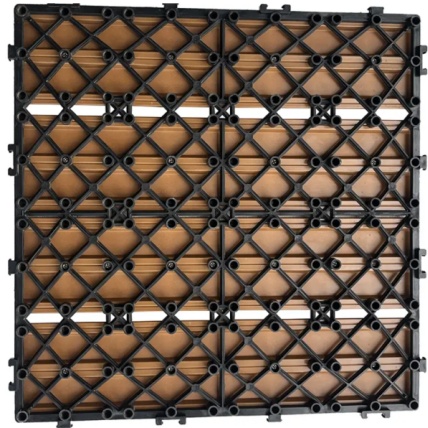
How to remove common outdoor stains from WPC decking tiles
Different stains behave differently. The key is to match the method to the stain type so you don’t over-scrub or use harsh chemicals unnecessarily.
1 Mud, dust, and general grime
Best approach: sweep → soap wash → rinse
Let mud dry, then sweep it away first.
Wash with mild soap and warm water.
Rinse well to prevent soap film.
Tip from experience: Most “stubborn grime” is actually multiple layers of fine dust and pollen. Two light washes often beat one aggressive scrub.
2 Leaf stains and tannin marks
Leaves and plant debris can release tannins, leaving brownish stains—especially after rain.
Best approach: quick action + mild cleaner
Remove leaves quickly (don’t let them sit wet for days).
Wash with mild soap and warm water.
If staining remains, use a baking soda paste (baking soda + a little water), gently scrub, then rinse.
Prevention: In fall and rainy seasons, increase sweeping frequency. The easiest tannin stain is the one you never let develop.
3 Algae, moss, and mildew film
Shaded or damp areas can develop a green film, especially if drainage under tiles is poor.
Best approach: clean + improve drying conditions
Sweep off loose debris.
Wash with soap and warm water.
For a persistent film, use diluted vinegar water (for example, mild dilution), gently scrub, then rinse thoroughly.
Improve airflow and drying: make sure water isn’t trapped underneath, and check that the base has proper slope or drainage.
Important note: If mildew keeps returning, it’s usually a moisture management issue (shade + standing water + debris), not a “tile defect.” Cleaning helps, but drainage fixes solve it long-term.
4 Food grease, barbecue oil, and sauce stains
These happen on patios more often than anyone expects.
Best approach: blot fast + soap wash
Blot excess oil with paper towels (don’t spread it).
Wash the area with warm water + dish soap.
Scrub gently with a soft brush and rinse well.
Repeat once if needed rather than using harsh degreasers immediately.
Best habit: Keep a small “outdoor cleaning kit” near grilling areas. Speed matters with oil.
5 Rust marks from furniture legs or metal objects
Rust stains can appear under wet furniture feet.
Best approach: gentle spot treatment
Start with soap and warm water.
If the mark remains, try a mild vinegar solution on a cloth, dab and gently scrub, then rinse.
Prevention: Use protective pads on furniture legs and keep metal items off wet surfaces for long periods.
6 Water spots and mineral deposits
Hard water can leave white or gray mineral spotting.
Tip: Always rinse after any acidic treatment so it doesn’t linger on the surface.
A stain-removal decision table you can actually use
If you manage multiple outdoor areas (or you just want a fast answer), this table can help.
Stain type | What it looks like | First step | Next step if needed |
Dust/pollen film | Light gray/yellow haze | Rinse + sweep | Mild soap wash + soft brush |
Leaf tannins | Brown marks | Soap wash | Baking soda paste spot scrub |
Algae/mildew film | Green/black film | Soap wash | Diluted vinegar water + improve drainage |
Grease/BBQ oil | Dark spots, slippery feel | Blot + soap wash | Repeat warm soap wash, gentle brush |
Rust marks | Orange-brown spots | Soap wash | Vinegar dab + rinse well |
Mineral water spots | White chalky film | Rinse | Vinegar wipe + rinse |
What to avoid when cleaning WPC decking tiles
Because wpc decking tiles are engineered surfaces, overly aggressive methods can reduce texture and change appearance.
We generally recommend avoiding:
Wire brushes or metal scrapers that can scratch the surface
Strong solvents that may affect the finish or color
Very high-pressure washing at close distance (it can damage texture or force water into joints)
Bleach overuse (occasional controlled use may be acceptable in some contexts, but frequent use can be harsh and isn’t usually necessary)
If you’re unsure about a cleaner, test it on a small, less-visible area first.
Closing thoughts and where to learn more
Outdoor floors don’t need to be high-maintenance to be beautiful. The most effective strategy is simple: sweep regularly, rinse occasionally, treat stains early, and avoid overly harsh tools. If you do that, wpc decking tiles can remain clean, comfortable, and visually consistent through changing seasons—whether they’re installed on a sunny balcony, a shaded garden corner, or a busy patio where food and foot traffic are part of everyday life. If you’re comparing tile structures, surface textures, or you want guidance on choosing a WPC decking tile that fits your climate and usage (poolside slip resistance, heavy commercial traffic, rooftop drainage, or easy DIY installation), you can visit www.winyoungtech.com to learn more. And if you’d like to discuss your project needs directly, you’re welcome to contact Winyoungtech—we’re glad to share practical recommendations and help you select options that make cleaning and long-term maintenance genuinely easier.
FAQ
1) How often should I clean WPC decking tiles outdoors?
For most outdoor spaces, we suggest a quick sweep weekly (or as needed) and a light soap wash about once a month, adjusting for season and traffic.
2) Can I remove mold or algae from WPC decking tiles without harsh chemicals?
Yes. In many cases, mild soap washing plus a gentle brush works. For persistent film, a diluted vinegar-water wipe can help, followed by thorough rinsing and better drying conditions.
3) What is the best way to prevent outdoor stains on WPC decking tiles?
Preventive habits work best: remove wet leaves quickly, keep drainage paths open, use mats near grills and doors, and rinse after heavy rain or dusty weather.
4) Do interlocking WPC decking tiles trap dirt underneath?
They can if debris accumulates and drainage is poor. Keeping gaps clear and periodically lifting a small section (if your layout allows) for inspection can help maintain airflow and cleanliness.


