Outdoor decking represents a significant capital investment for any residential or commercial property. Unfortunately, traditional wood experiences a rapid deterioration rate. This constant battle against the elements often forces premature replacement. Buyers naturally want materials yielding long-term value without constant upkeep. Enter wood-plastic composite materials. They serve as the modern industry standard for true longevity. The material bridges the gap between natural timber aesthetics and synthetic durability. You get beautiful outdoor living spaces without the grueling annual maintenance.
However, smart buyers must look past marketing claims. While manufacturers heavily promote 25- to 50-year warranties, your actual functional lifespan varies. It depends heavily on the specific material generation you choose, such as uncapped versus capped boards. Environmental stressors play a major role in how materials age over time. Most importantly, installation integrity dictates how long the structure truly lasts outdoors. This guide reveals what you can actually expect regarding lifespan. We explore essential installation factors to protect your investment for decades.
Key Takeaways
- Baseline Lifespan: Modern capped WPC decking typically lasts 25 to 30+ years, significantly outperforming traditional timber (10–15 years).
- Failure Points: WPC rarely fails from rot; premature degradation is usually caused by poor sub-frame ventilation or improper installation voiding the warranty.
- Warranty Tiers: Industry standards offer 25-year structural and fade/stain warranties for standard lines, scaling up to 50 years for premium PVC-blend or advanced capped composites.
- ROI Calculation: The higher upfront cost of composite decking breaks even against traditional wood around year 7-10 due to eliminated staining, sealing, and repair costs.
The Baseline Lifespan of WPC Decking (Expectations vs. Reality)
When evaluating WPC decking, you must first understand the technological evolution of the material. Not all composite boards perform identically. Their lifespan directly correlates to how they were manufactured.
First-Generation (Uncapped) WPC
Early iterations of composites are known as uncapped boards. These first-generation materials typically last 10 to 15 years in typical outdoor settings. Manufacturers created them by blending wood fibers and recycled plastics, leaving the core material exposed to the environment. Because they lack an outer protective shield, they remain vulnerable to moisture absorption. Over time, UV exposure causes noticeable fading. Homeowners often notice mold or mildew growth in damp climates because the exposed wood fibers invite organic decay.
Second-Generation (Capped) WPC
Modern engineering solved the vulnerabilities of early composites. Second-generation boards feature a protective polymer shell. We call this a "cap." This capping process wraps the organic wood-plastic core in a heavy-duty synthetic shield. It acts much like the cover on a golf ball. Under normal outdoor conditions, modern capped composites boast a realistic lifespan of 25 to 30 years. They resist staining, scratching, and severe fading. The polymer shell blocks water ingress entirely.
Table 1: WPC Decking Lifespan by Material Generation
| Material Type | Surface Protection | Average Lifespan | Primary Vulnerability |
| Traditional Pine | None (Requires Sealer) | 10–15 Years | Rot, Splintering, Termites |
| First-Gen WPC | Uncapped (Exposed Core) | 10–15 Years | Staining, UV Fading, Mold |
| Second-Gen WPC | Capped (Polymer Shell) | 25–30+ Years | Sub-frame Failure, Trapped Heat |
The "Actual vs. Expected" Gap
Consumers often express skepticism about 30-year marketing claims. A significant actual-versus-expected gap exists in the decking industry. The truth is straightforward. While your capped composite boards may easily last 30 years, the underlying timber sub-frame often rots in just 15 years. Treated pine joists represent the true bottleneck for outdoor longevity. If you do not properly protect the wood frame beneath the deck, the entire structure fails prematurely. You cannot enjoy a 30-year surface on a 15-year foundation.
Why Composite Decking Outlasts Traditional Timber
Understanding the science behind composite decking helps justify the initial expense. The material fundamentally changes how outdoor structures interact with nature.
Moisture and Rot Resistance
Natural wood acts like a sponge. It absorbs rainwater, swells, and then shrinks as it dries. This constant expansion and contraction causes cracking, warping, and eventual rot. WPC materials prevent this destructive cycle. The plastic encapsulation of the wood fibers completely blocks water ingress. Even during heavy storms or prolonged wet seasons, the core remains dry. This synthetic barrier stops the swelling and warping that ultimately destroys natural timber structures.
Pest Mitigation
Wood-boring insects and termites pose a massive threat to natural decks. They compromise structural integrity silently. The polymer matrix in composite boards eliminates this susceptibility entirely. Termites cannot digest the plastic-wood blend. By removing the primary food source for pests, you instantly add decades to your deck's usable lifespan.
UV and Color Stability
If you leave a piece of natural cedar in the sun, it turns a brittle gray within a year. Sun damage breaks down the lignin in wood. Modern WPC solves this through advanced chemistry. Manufacturers embed high-performance UV inhibitors directly into the capping layer. These chemical additives act like sunscreen for your deck. They prevent severe graying and stop the structural brittleness seen in aging timber. While minor weathering occurs, the rich color remains stable for decades.
Cost-to-Lifespan Ratio (ROI)
We must briefly map the lifecycle cost to understand true value. Traditional wood seems cheap initially. However, it requires rigorous bi-annual maintenance. You must pressure wash, sand, and re-stain wood frequently. The labor and material costs for this upkeep accumulate rapidly. WPC provides passive durability. Its higher upfront cost breaks even around year seven. Over a 20-year horizon, the return on investment becomes overwhelmingly positive because you eliminate staining, sealing, and costly board replacement.
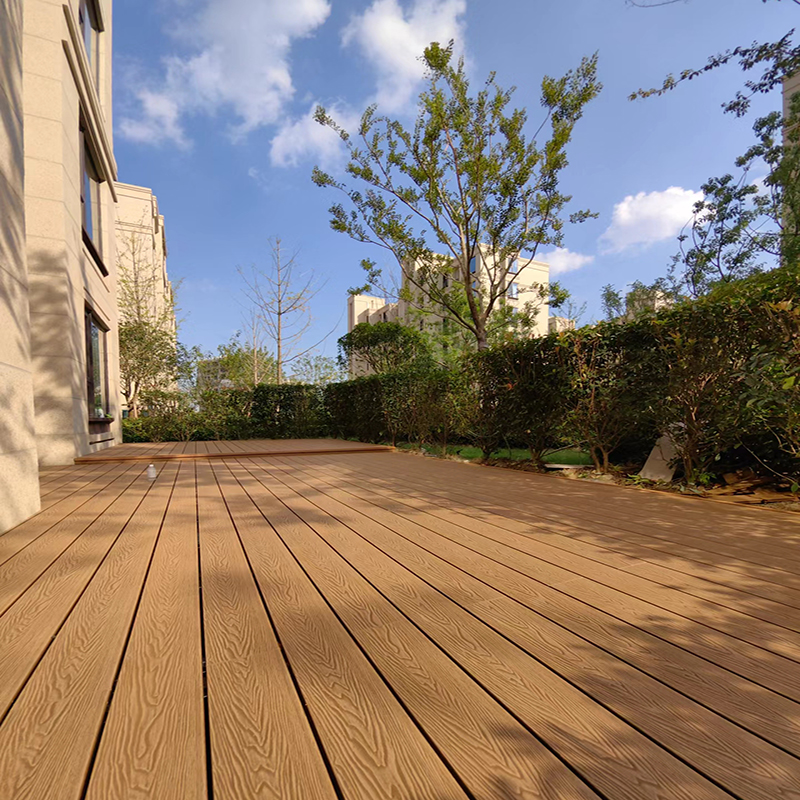
Climate and Environmental Stressors: What Limits WPC Durability?
Even the toughest materials respond to their environment. Your local climate introduces specific stressors that impact how long your outdoor decking performs over time.
High-Heat and Tropical Climates
Intense sun exposure tests the limits of any building material. Darker WPC boards naturally absorb and retain heat. In extreme summer climates, this heat absorption causes significant thermal expansion. The boards physically grow in length as they bake in the sun. Installers must implement specific expansion gap planning. If they push boards too tightly together during installation, the summer heat will cause severe buckling and structural warping.
High-Moisture and Coastal Zones
Coastal homes face continuous high-humidity environments and corrosive salt air. Capped composites perform exceptionally well here, provided you choose a high-grade product. The primary risk in high-moisture zones is surface mold. If organic debris like wet leaves sits on the deck, mold can grow on the dirt layer. High-grade capping prevents this mold from penetrating the board. You simply wipe the mold away from the synthetic surface without worrying about internal rot.
Freeze-Thaw Cycles
In regions with harsh winters, rapid temperature drops challenge material rigidity. Water freezes on the surface, and the ambient temperature fluctuates wildly. This seasonal shift forces the material to undergo rigorous thermal contraction. The boards shrink in the cold. Installers must account for this movement. Proper fastening systems allow the material to expand and contract naturally without shearing the screws or cracking the boards.
Evaluating WPC Warranties (What Manufacturers Actually Cover)
Do not simply glance at the "25-year" sticker on a pallet of decking. You must read the fine print to understand what manufacturers actually guarantee in the real world.
Structural Integrity Guarantees
A standard 25-year structural warranty protects you against catastrophic manufacturing defects. It covers severe issues like splintering, cracking, peeling, and severe rot under normal use. However, you must pay attention to the exclusions. Warranties universally exclude damage from ground contact. You cannot bury composite boards in the dirt. They also exclude total submergence in water. The warranty covers deck surfaces, not submerged docks.
Fade and Stain Warranties
Manufacturers distinguish between natural weathering and defective fading. During the first 12 weeks of sunlight exposure, your deck will experience a slight color shift. This initial weathering is completely normal as the material acclimates to UV light. Warrantable fading refers to aggressive, splotchy discoloration that exceeds industry standards. Stain warranties typically cover food and beverage spills, provided you clean them within a reasonable timeframe (usually 7 days).
Prorated vs. Unprorated Terms
Buyers must check the fine print regarding payout structures. Prorated warranties decrease in payout value over time. If a board fails in year 20, you might only receive 20% of the replacement cost. Premium brands often offer unprorated labor and material replacement for the first 10 to 25 years. This means they cover 100% of the cost to replace a defective board, including the labor, providing significantly better protection.
Chart: Prorated vs. Unprorated Warranty Value Over Time
| Years Installed | Unprorated Coverage Value | Standard Prorated Value |
| Years 1-5 | 100% (Materials + Labor) | 100% (Materials Only) |
| Years 6-10 | 100% (Materials + Labor) | 80% (Materials Only) |
| Years 11-20 | 100% (Materials Only) | 40% (Materials Only) |
| Years 21-25 | 100% (Materials Only) | 10% (Materials Only) |
Common Warranty Voiders
Manufacturer protection disappears instantly if you ignore installation manuals. We see these common mistakes void warranties daily:
- Inadequate Joist Spacing: Spacing joists further than 400mm (16 inches) on center leads to sagging and voids structural guarantees.
- Poor Ground Clearance: Failing to provide minimum airflow space beneath the deck traps moisture.
- Unapproved Fasteners: Using cheap, non-approved hidden clips instead of the manufacturer's proprietary hardware system.
- Improper Gapping: Jamming boards tight together without leaving room for thermal expansion.
Installation Realities to Maximize Your Outdoor Decking ROI
The best material in the world fails if installed poorly. Maximizing your investment requires strict adherence to engineering principles during the build phase.
Sub-Frame Protection (Joist Tape)
We established that timber sub-frames rot faster than composite boards. You must protect the wood skeleton. We highly recommend applying butyl joist tape to the tops of all timber joists and bearers. This waterproof tape seals around screw penetrations and prevents water from pooling on the flat wooden surfaces. Protecting the wood frame is absolutely critical. It ensures the foundation lasts just as long as the premium boards sitting on top of it.
Ventilation and Ground Clearance
Trapped moisture acts as a silent killer for any outdoor structure. Engineering guidelines require robust airflow beneath the deck. Installers typically mandate a minimum 150mm (6 inches) of ground clearance. Cross-ventilation prevents ground moisture from evaporating and trapping itself under the boards. When moisture gets trapped, it creates a micro-climate of high humidity. This uneven moisture exposure causes even the best composite boards to cup or warp over time.
Proper Gapping for Thermal Expansion
Temperature dictates how WPC materials behave during installation. Installers must implement standard gapping rules based on the ambient temperature on the day of the build.
- Side-to-Side Gapping: Typically requires 5mm to 6mm to allow water drainage and dirt to fall through.
- End-to-End Gapping: Varies by temperature. If installing on a freezing morning, leave a larger gap, as the boards will expand when summer arrives. If installing on a 90-degree afternoon, leave a smaller gap, as the boards are already fully expanded.
Routine Maintenance Non-Negotiables
Composite materials provide a low-maintenance lifestyle, not a zero-maintenance one. You must follow safe cleaning protocols to protect the polymer shell. Use a soft-bristle brush, warm water, and mild dish soap to remove seasonal dirt. Emphasize avoiding high-pressure power washing. An aggressive pressure washer easily slices through the polymer cap, permanently ruining the board's waterproofing. Furthermore, never use harsh bleach-based chemicals. They degrade the UV inhibitors and cause accelerated fading.
Conclusion
WPC materials offer a proven, high-ROI long-term solution for modern outdoor living spaces. They outlast natural timber by decades, resist pests, and eliminate the exhausting cycle of sanding and staining. However, achieving a 30-year lifespan requires careful decision-making. You must select a second-generation capped material and enforce strict installation standards. The sub-frame must be protected, and thermal expansion must be respected.
Your next step involves practical evaluation. Order physical material samples to test their scratch resistance and heat retention in your specific backyard sunlight. When requesting installation quotes, demand detailed scopes of work. Ensure your contractor explicitly includes sub-frame joist tape, proper ventilation planning, and warranty-compliant hardware. By taking these precise steps, you secure a beautiful outdoor space designed to last a lifetime.
FAQ
Q: Does WPC decking fade in the sun over time?
A: Yes, but only slightly. Capped composites experience a natural "weathering" period during the first 10 to 12 weeks of sun exposure. The color shifts slightly as it acclimates to UV light. After this initial phase, the high-performance UV inhibitors in the capping layer lock the color in, preventing the severe long-term fading associated with traditional wood or older uncapped composites.
Q: How long does an uncapped composite deck last compared to capped?
A: First-generation uncapped composite boards typically last between 10 and 15 years. Because their wood-plastic core remains exposed, they absorb moisture and are prone to fading and mold. Modern capped composites feature a protective polymer shell that completely seals the board, extending the realistic lifespan to 25 or 30+ years.
Q: Can WPC decking warp or melt in extreme heat?
A: High-quality composite boards do not melt in extreme summer heat. However, they do absorb heat and undergo thermal expansion. If installers do not leave proper expansion gaps at the ends of the boards, the expanding material will push against itself and warp or buckle. Correct gapping eliminates this structural risk entirely.
Q: Do I need to seal or paint my WPC deck?
A: No. You should never seal, stain, or paint capped composite boards. The protective polymer shell is engineered to repel moisture and resist stains passively. Applying paints or harsh chemical sealers will fail to adhere properly, create a peeling mess, and ultimately damage the factory cap, instantly voiding your manufacturer warranty.


