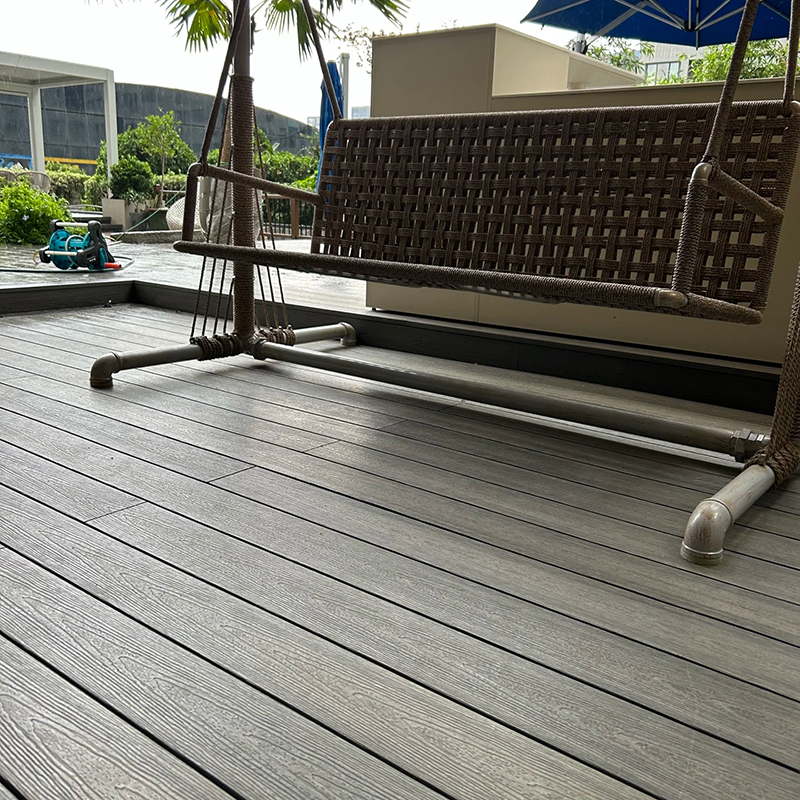
Upfront material costs only matter when measured against long-term performance and replacement cycles. You want materials built to endure harsh weather. Property owners and developers often struggle to filter through exaggerated marketing claims. They need accurate data to understand the true lifecycle of composite materials. Finding objective facts feels difficult amid glossy brochures. You deserve absolute transparency about how outdoor materials actually age over decades. While Wood-Plastic Composites (WPC) generally outlast traditional timber, actual longevity depends heavily on manufacturing generation. It relies on differences between capped and uncapped boards. Regional climates also play a huge role in material degradation over time. Furthermore, builders must strictly adhere to installation protocols to ensure success. Read on to discover exactly how long these modern outdoor solutions last. We will explore structural changes, common environmental stressors, and proper maintenance methods. You will learn how to maximize your investment efficiently.
Key Takeaways
High-quality WPC decking typically lasts between 15 to 30 years under standard outdoor conditions.
"Co-extruded" (capped) boards offer significantly higher resistance to moisture and UV degradation than first-generation uncapped boards.
While WPC is a highly weather resistant decking option, it is low maintenance, not zero maintenance.
Initial gloss reduction during the first few months is a normal stabilization process, not a sign of structural failure.
Improper installation—specifically inadequate joist spacing and poor drainage—is the leading cause of premature WPC failure.
The Baseline Expectation: Unpacking the 15 to 30-Year Lifespan
When you evaluate composites, you must distinguish between product generations. They perform very differently outdoors. First-generation WPC entered the market decades ago. These uncapped boards typically offer a realistic lifespan of 10 to 15 years. Manufacturers mixed wood fibers directly into the plastic matrix. They left the outer surface exposed to the elements. This exposed wood content creates structural vulnerabilities. Moisture can penetrate the surface easily over time. Mildew and mold often develop in damp environments. You will also notice gradual color loss. UV rays degrade the exposed wood particles.
Second-generation products revolutionized the entire industry. We call these capped or co-extruded boards. They boast a much longer lifespan of 25 to 30 years or more. Manufacturers extrude a robust polymer shield around the core. This protective layer completely seals the inner materials. It prevents moisture intrusion effectively. The protective shell transforms standard composites into highly durable WPC decking. You gain superior protection against severe scratches and deep stains.
We must compare this lifecycle against traditional treated lumber objectively. Treated wood usually requires complete replacement every 10 to 15 years. Wood splits, splinters, and rots naturally. A single installation of premium composite outlasts two timber installations. You avoid the physical labor of repeated deck replacements. The initial effort yields decades of highly stable use.
Material Generation
Realistic Lifespan
Surface Architecture
Primary Vulnerability
First-Generation WPC
10-15 Years
Uncapped (Exposed Core)
Mold and Gradual Fading
Second-Generation WPC
25-30+ Years
Co-extruded Polymer Shield
Improper Installation Methods
Treated Pine Lumber
10-15 Years
Porous (Requires Sealant)
Rot and Splintering
Environmental Stressors: How Climate Impacts Outdoor Deck Materials
Climate dictates how outdoor deck materials age practically. Every region presents unique challenges. You must understand how your local environment tests your installation over time.
Moisture and humidity pose significant threats. Many buyers seek waterproof composite boards for wet climates. The outer polymer shell successfully repels heavy rain. It blocks humidity from entering the vulnerable core. However, continuous standing water remains dangerous. It can eventually compromise structural integrity. This happens if contractors leave cut board ends unsealed. Water pools and seeps into the raw internal fibers. You must ensure proper drainage slopes to prevent pooling.
Prolonged sunlight also attacks the material constantly. UV exposure heats the surface intensely during summer. Heat affects the molecular structure of the plastics. Manufacturers combat this degradation using specialized UV inhibitors. They blend these chemicals into the polymer cap during production. These inhibitors absorb and dissipate harmful solar radiation. They prevent the plastic surface from becoming brittle.
Temperature fluctuations trigger thermal expansion and contraction heavily. Materials expand in extreme summer heat. They contract rapidly during freezing winters. These freeze-thaw cycles stress the entire framework. They impact fastener integrity over a long decade. Screws can loosen if boards move too much. You need specialized hidden fasteners for safety. These clips allow controlled material movement without damaging the boards.
Addressing the Myth: Fading vs. Structural Degradation
Homeowners often worry about severe color loss. They confuse cosmetic changes with material failure. We need a transparent reality check regarding post-installation gloss changes.
When contractors install new boards, they look incredibly shiny. This initial gloss reduces during the first few months. It is a completely normal stabilization process. The environment naturally weathers the outermost microscopic layer. It is a hallmark of highly weather resistant decking settling into its permanent environment.
You must differentiate between natural aging and material failure. Expected color stabilization occurs within the first 12 weeks. The boards lose about 10% to 15% of their initial bright pigment. After this period, the color locks in permanently. This minor cosmetic shift does not weaken the board. Actual UV degradation operates differently. Severe degradation causes chalking or surface flaking. It destroys the polymer chains deeply. High-quality capped boards prevent this structural breakdown entirely.
Maintain a highly skeptical lens when reading marketing materials. Warn against manufacturers claiming "100% fade-proof" materials. Science shows no outdoor polymer is completely immune to the sun. Advise buyers to look for "fade-resistant" warranties instead. Honest brands guarantee color fastness within specific measurable parameters.
Preserving Lifespan: Installation Risks and Low Maintenance Decking Care
The finest materials still fail if installed incorrectly. Installation quality determines the actual lifecycle. You cannot skip essential structural guidelines.
Improper installation is the absolute leading cause of premature failure. It acts as the number one lifespan killer. Contractors sometimes fail to leave proper thermal expansion gaps. Boards need room to breathe and move laterally. If they butt tightly together, they buckle under severe heat. Using improper joist spans also voids warranties instantly. Excessive spacing causes heavy boards to sag and warp. This structural failure happens regardless of board quality.
Drainage and ventilation require critical attention before building. You must outline the need for excellent under-deck airflow. Trapped humidity destroys the wooden substructure rapidly. Moisture rises continuously from the damp soil below. It accumulates under the boards if air cannot circulate freely. Builders must ensure adequate ground clearance always. They should lay gravel or landscape fabric beneath the frame.
People often misunderstand daily maintenance requirements. You must define what low maintenance decking actually requires. It is decidedly not zero-maintenance. Reaching the 25-year mark takes consistent basic effort. You should establish a reliable cleaning schedule:
Perform a thorough semi-annual washing during spring and fall.
Use mild dish soap and a soft-bristle nylon brush.
Clear debris between gaps weekly to prevent trapped moisture.
Avoid dragging heavy metal furniture across the surface.
Never use harsh abrasive chemicals or heavy bleach solutions.
Evaluating Warranties to Source Durable WPC Decking
Warranties reveal a manufacturer's true confidence level. They expose the rigorously tested limits of their products. You must learn how to read them critically before purchasing.
Always read the fine print carefully. You need to evaluate B2B and consumer warranties differently. Differentiate clearly between structural warranties and cosmetic stain/fade warranties. Structural coverage protects against rotting, severe splitting, or termite damage. Stain and fade coverage specifically guarantees cosmetic appearance parameters. Brands often separate these two vital categories.
Understand the strict difference between prorated and non-prorated terms. A non-prorated warranty covers the full replacement value. It lasts for the entire stated warranty period. A 25-year prorated warranty operates very differently. It means the financial coverage diminishes over time. In year twenty, the manufacturer might only cover ten percent of the replacement cost. You carry significantly more financial risk with prorated agreements.
Develop robust shortlisting criteria when evaluating different suppliers. Use a solid 3-point checklist for buyers:
Ask for testing data on water absorption: Lower absorption rates indicate denser, better-sealed composite cores.
Verify the capping thickness: A thicker polymer shield generally resists daily scratches much better.
Check warranty claim requirements carefully: Some brands require strict proof of professional installation to honor claims.
Conclusion
We must summarize the key longevity findings objectively. WPC provides a superior long-term lifespan compared to traditional wood. It offers an excellent return on effort and longevity. Buyers must select co-extruded capped boards to achieve these optimal results. They must also enforce strict installation standards on site. Proper joist spacing and gap planning prevent premature structural buckling. Routine gentle cleaning keeps the polymer shell intact for decades.
You should take proactive action before purchasing materials. Request material samples from multiple suppliers directly. Inspect the capping quality directly with your own hands. You can consult with an engineering team for climate-specific recommendations. They understand local temperature swings and complex humidity challenges. Making highly informed choices ensures your outdoor space lasts thirty beautiful years.
FAQ
Q: Does WPC decking rot over time?
A: High-quality composite boards strongly resist rotting. The durability comes from the exact plastic-to-wood ratio. Manufacturers encapsulate vulnerable wood fibers inside waterproof polymers. Capped boards feature an extra protective outer shield. This shell completely blocks moisture penetration. Without moisture, rot-causing fungi cannot survive. First-generation uncapped boards occasionally suffered from mildew, but modern co-extruded options eliminate this risk entirely.
Q: Can extreme freezing temperatures cause composite boards to snap?
A: Extreme cold does make plastic polymers more brittle. However, snapping is exceptionally rare with correct installation. The core issue usually involves the supporting substructure underneath. You must follow standard joist spacing requirements precisely. Proper spacing supports the boards evenly under heavy winter snow loads. Using approved hidden fasteners allows the boards to contract safely without snapping at the hard screw points.
Q: How much does WPC decking shrink or expand?
A: Composite materials react to temperature changes predictably. A standard board can expand or contract up to 3/16 of an inch. This movement occurs during intense seasonal temperature swings. The exact expansion rate depends on the specific polymer blend used. This lateral movement highlights the absolute necessity of mandatory installation gaps. Leaving proper spacing at the board ends prevents them from buckling against each other.
Q: Is it safe to power wash WPC to extend its life?
A: You can safely use a power washer if you exercise extreme caution. High pressure can severely damage the protective shell. You must observe maximum PSI limits closely. Keep the water pressure strictly under 1500 PSI. Use a wide fan tip to disperse the heavy water force. Keep the nozzle at least eight inches above the surface to avoid permanently etching the polymer cap.