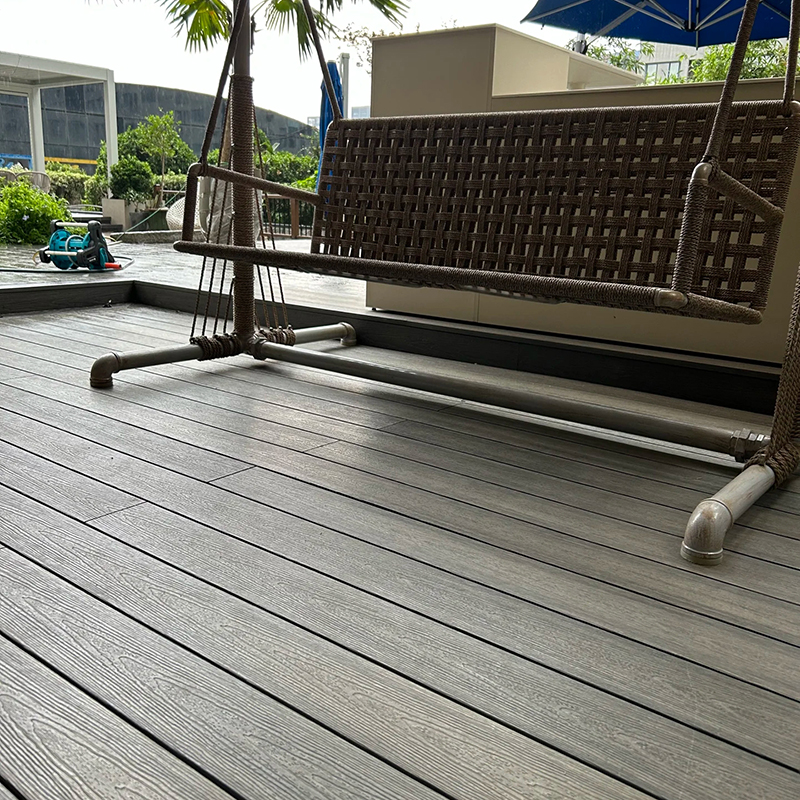
Homeowners and commercial developers face a constant dilemma when designing outdoor spaces. You want striking visual appeal to enhance property value and create an inviting atmosphere. However, you also dread the relentless upkeep natural timber inevitably demands. Balancing beautiful aesthetics against long-term maintenance expenses often feels like an impossible compromise. Traditional lumber rots, splinters, and requires annual sealing. Pure synthetic plastics solve the rot issue but can look artificial or feel cheap underfoot.
Enter WPC decking. This engineered hybrid successfully bridges the gap between traditional lumber and purely synthetic plastics. It solves the ongoing maintenance nightmare entirely while preserving the warm, natural appearance of wood. We created this comprehensive guide to give you an objective evaluation of these composite materials. You will discover exactly how they perform under harsh real-world conditions. You will also learn practical installation rules and see where this material excels most. Ultimately, this resource provides the absolute transparency you need to make a smart, confident project decision.
Key Takeaways
Composition: WPC is a hybrid material blending recycled wood fibers and thermoplastics, offering the look of wood with the durability of plastic.
Cost vs. ROI: While upfront costs are 15-30% higher than traditional treated lumber, WPC achieves ROI within 4-6 years through eliminated maintenance (staining/sealing).
Implementation Criticals: Success relies heavily on correct installation, specifically accounting for thermal expansion gaps and proper joist spacing.
Best Use Cases: Ideal for high-moisture environments, exposed balconies, terraces, and commercial patios requiring slip resistance and minimal upkeep.
The Anatomy of Wood Plastic Composite Decking
What exactly is this modern building material? The industry formally refers to it as wood plastic composite decking. Manufacturers engineer it using a highly precise blend of raw materials. The standard mixture typically includes 50% to 60% fine wood fibers or wood flour. This organic component provides natural rigidity, texture, and a realistic matte finish. Next, manufacturers add 30% to 40% high-density polyethylene (HDPE). This tough plastic acts as an impenetrable shield against moisture. Finally, 5% to 10% chemical additives complete the formula. These specific additives provide essential UV resistance, color stabilization, and internal binding strength.
The extrusion process brings these distinct elements together. Factories mix the raw materials under intense heat. The melted blend then enters powerful extrusion machines. High pressure forces the liquid mixture through specialized steel dies. These dies shape the flowing material into solid or hollow profiles. As the boards cool, they become incredibly dense and structurally stable. This unified manufacturing method completely prevents the future separation of wood and plastic components.
Many property owners prioritize sustainability. High-quality composites utilize diverted landfill waste. Manufacturers rely heavily on recycled plastic bottles, discarded grocery bags, and reclaimed sawmill offcuts. They strictly avoid virgin plastics whenever possible. This responsible sourcing makes it a highly viable eco friendly decking alternative. You essentially build your pristine patio using materials saved directly from the garbage dump.
Why WPC Decking is Dominating Outdoor Living Spaces
Traditional timber frequently struggles against the elements. It absorbs rainwater quickly. It rots from the inside out. Termites love consuming it. Conversely, the impermeable nature of the plastic binding solves these exact issues. Premium outdoor composite decking completely encapsulates the vulnerable wood fibers. Fungal decay cannot take root. Termites ignore the plastic-coated surface entirely. You never have to worry about the severe warping common in standard pine or cedar.
Financial advantages become undeniable over time. Let us map out the predictable lifecycle expenses. Timber demands frustrating recurring costs. You must buy mechanical sanders, chemical strippers, expensive stains, and waterproof sealants every few years. You also spend countless hours performing the grueling labor. WPC eliminates this financial and physical drain. You only need simple soap and water for occasional seasonal cleaning. The return on investment happens rapidly.
This material offers incredible application versatility. Structural performance remains consistently strong across various distinct scenarios. Here are a few challenging environments where traditional materials frequently fail:
Rooftop terraces exposed to relentless daily solar radiation.
Ground-level patios situated near damp soil or poor yard drainage.
Poolside decks facing constant water splashing and harsh pool chemicals.
Commercial walkways requiring extreme heavy foot traffic endurance.
In all these scenarios, the hybrid engineering resists degradation effortlessly.
Transparent Evaluation: WPC Pros and Cons
Every building material has strengths and weaknesses. You need a balanced, objective view before buying materials for your home.
Let us explore the core advantages first. You get high color retention. Modern capped variants resist severe fading beautifully. You also get a perfectly splinter-free surface. Barefoot zones remain safe for children. This greatly reduces liability for commercial spaces. Furthermore, you experience no toxic chemical leaching. Older pressure-treated woods often contain harsh chemical preservatives. Composites remain entirely non-toxic and safe for surrounding garden soil.
Next, you must understand the limitations and how to successfully mitigate them. Heat retention is a common complaint. The material gets hotter under direct sunlight than natural wood. The plastic components actively absorb solar energy. To solve this, specify lighter surface colors. Grooved profiles also dissipate heat much faster. Upfront capital is another factor. You will face a higher initial material cost. However, you must factor in the 10-25 year lifespan. The long-term labor and maintenance savings easily justify the initial capital expenditure. Finally, consider the overall weight. The boards are much denser than natural wood. You will need highly robust substructures to support the extra load safely.
Material Trade-offs Analysis
Key Attribute
Advantage (Pros)
Limitation (Cons)
Mitigation Strategy
Durability
Impervious to rot, splinters, and termites.
Heavier than natural wood.
Ensure proper joist spacing and robust substructure design.
Maintenance
Requires only basic soap and water cleaning.
Higher upfront purchase cost.
Calculate the 10-year ROI to offset the initial CapEx.
Aesthetics
High color retention; realistic wood grain.
Can retain significant heat in direct sunlight.
Choose lighter shades or grooved boards for exposed areas.
Buyer’s Framework: How to Evaluate Composite Deck Boards
The market offers overwhelming choices. You need a structured approach to evaluate composite deck boards effectively.
Understand the generations of technology first. Early uncapped boards absorbed grease stains easily. Modern buyers should always insist on co-extruded variants. The industry calls these "capped" boards. They feature a durable, protective polymer shell covering the entire core. This shield fiercely resists wine, mustard, and grill grease. It also prevents severe UV fading.
Next, carefully choose between solid and hollow profile types. Solid boards mimic real wood weight and sound. They provide the best performance for commercial load-bearing spaces and premium residential homes. Hollow boards are lighter and more cost-effective. They work wonderfully for residential balconies. However, they strictly require specialized end-caps to prevent moisture or pest ingress.
Slip resistance matters significantly in wet environments. Define standard industry metrics for your specific project. Look for official R-ratings or P-ratings on the specification sheets. An R10 or P4 rating indicates excellent surface traction. These numbers prove the manufacturer actively tested the boards for safety. Never guess about slip resistance near a swimming pool or exposed balcony.
Watch out for warranty traps. Read the fine print carefully. Manufacturers often separate "stain and fade" coverage from basic structural integrity. They might guarantee against core rot for 25 years but only cover color fading for 10. Also, check the installation clauses. Many warranties void completely if you fail to use a certified installer. They will also deny claims if you ignore the mandatory gapping rules.
Implementation Realities: What to Know Before Installation
Success relies heavily on flawless execution. You must respect the physical properties of the hybrid material.
Thermal expansion and contraction dictate the entire installation process. The boards move continuously as ambient temperatures fluctuate. They grow slightly in the hot afternoon sun. They shrink back down during cold nights. You must leave precise gaps at butt joints and edges. If you push the boards tight together, they will buckle and warp upward. Always consult the manufacturer gap charts based on your local climate extremes.
Substructure spacing is another critical factor. Remember, WPC is strictly a surface material. It bends much easier than thick structural timber. You must use narrower joist spacing. Standard practice requires 12 to 16 inches on center. If you install boards in a diagonal layout, drop the spacing to 12 inches immediately. Wide joist gaps lead to inevitable, permanent sagging over time.
Ventilation Requirements
Ventilation rules are often ignored by novice installers. You need adequate, continuous airflow beneath the entire deck surface. Heat and ground moisture get trapped underneath easily. This creates extreme temperature differentials between the top and bottom of the boards. Maintain minimum ground clearances. Keep the outer sides reasonably open to let fresh air circulate freely.
Hidden Fastening Systems
Finally, avoid traditional face-screwing whenever possible. Driving screws directly through the top surface invites deep moisture penetration. It also creates a bumpy, unattractive finish known as mushrooming. We strongly recommend high-quality hidden fastening systems. Hidden clips sit neatly inside the side grooves. They hold the boards securely against the joists. More importantly, they allow for natural horizontal movement without shearing the metal screws.
Conclusion
WPC is a high-performance, long-term investment. It completely removes the unpredictable, exhausting maintenance variables of traditional outdoor spaces. You trade a higher initial cost for decades of stress-free relaxation. Your weekends remain yours to enjoy.
We encourage you to weigh your local climate realistically against the pros and cons listed above. Consider your daily sun exposure, typical moisture levels, and expected foot traffic. If you value your time and demand visual excellence, this hybrid material rarely disappoints.
Take action on your project today. Order physical material samples from reputable suppliers. Test them in your specific outdoor lighting across different times of the day. Finally, consult with a certified installer regarding your current substructure readiness to ensure a flawless application.
FAQ
Q: How long does WPC decking realistically last?
A: It typically lasts between 15 to 30 years. The exact lifespan depends heavily on the capping technology used and your local environmental factors. Premium capped boards endure much longer than early-generation uncapped versions. Most reputable manufacturers support these lifespans with robust 20-to-25-year structural warranties.
Q: Can WPC decking be painted or stained?
A: No, you should never paint or stain it. Engineers manufacture the permanent color directly throughout the core or the outer polymer cap. Applying paint completely voids the manufacturer warranties. It also ruins the entire low-maintenance benefit, as paint inevitably peels and requires scraping.
Q: Does WPC decking scratch easily?
A: Early generation uncapped boards could scratch somewhat easily. However, modern capped composites feature highly scratch-resistant polymer shells. Normal foot traffic and pet paws rarely cause issues. Dragging heavy, sharp patio furniture across the surface can still cause permanent damage, so use protective furniture pads.
Q: Is WPC structural? Can it be used for joists?
A: No. It is strictly designed as a decorative surface material. It lacks the load-bearing rigidity of solid wood or metal. You must always support it securely using a properly spaced treated timber, aluminum, or galvanized steel substructure.