If you’re choosing outdoor flooring, maintenance is often the deciding factor—even more than color or price. We hear it all the time: people love the warmth of wood, but they don’t love sanding, sealing, staining, and worrying about splinters or rot after one rough season. On the other hand, they want something that still looks “deck-like,” feels comfortable underfoot, and can handle everyday outdoor life: muddy shoes, spilled drinks, sun exposure, rain splash, pool humidity, and the occasional forgotten planter leaking on the surface. From our perspective as a manufacturer and supplier focused on outdoor surfaces, the real question isn’t “Which looks better on day one?” It’s “Which one will still look good with realistic upkeep on day 300?”
Understanding What Changes Maintenance: Material Structure
Wood tiles: natural beauty with natural movement
Wood tiles are made from real wood (often acacia, cedar, eucalyptus, or teak) and typically come as interlocking deck tiles with slats. Wood is porous and hygroscopic—it absorbs and releases moisture. That’s why wood expands and contracts, can cup or warp, and is vulnerable to UV fading and biological decay (mold, mildew, rot) if moisture sits too long.
WPC decking tiles: engineered stability with a wood-like surface
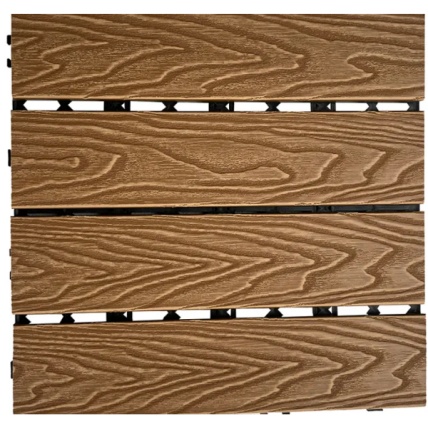
WPC (Wood Plastic Composite) combines wood fibers with polymers and additives. The result is a material designed to behave more consistently outdoors: it doesn’t need stainingwww to keep color, it doesn’t “drink” water like natural wood, and it’s generally more resistant to everyday moisture, insects, and surface wear. In real use, this engineered structure is what reduces maintenance—because fewer problems develop in the first place.
Quick Comparison: Maintenance Tasks at a Glance
Here’s a simplified overview before we go deeper:
Maintenance Category | Wood Tiles | WPC Decking Tiles |
Routine cleaning | Sweep + wash; can stain easily | Sweep + wash; stains wipe easier |
Surface protection | Needs periodic oil/seal/stain | No sealing or staining required |
UV & color fading | Fades faster; needs refinishing | Better fade resistance; gradual change |
Moisture behavior | Can swell/warp; mold risk | More moisture-resistant; less warping |
Splinters/cracking | Possible over time | Typically splinter-free |
Long-term refresh | Sanding/refinishing may be needed | Usually just cleaning; occasional deep wash |
Routine Cleaning: What You’ll Actually Do Week to Week
Wood tiles: gentle cleaning, but more caution
With wood tiles, sweeping is easy, but washing takes more care. Dirt can embed into the grain. If food, wine, or plant residue sits, staining is more likely. Many owners also avoid harsh cleaners because they can strip protective oils or finishes.
Typical weekly/bi-weekly routine for wood tiles:
Sweep off debris (leaves, grit, soil)
Rinse with water
Use a mild wood-safe soap if needed
Avoid high-pressure washing or aggressive scrubbing on soft woods
WPC decking tiles: similar routine, simpler outcomes
WPC decking tiles also benefit from sweeping and rinsing, but the surface is generally less absorbent. That usually means fewer “permanent” stains and less stress if you miss a spill for a day.
Typical routine for WPC:
Sweep regularly to prevent grit from scuffing the surface
Rinse with water
Use mild household detergent for spots
Soft brush for textured finishes when needed
Practical takeaway: Both materials like basic cleaning, but WPC is typically more forgiving if life gets busy.
Seasonal Maintenance: Where the Big Difference Starts
This is where many people feel the maintenance gap most clearly—especially after a wet season or a sunny summer.
Wood tiles: oiling/sealing is the common reality
Outdoor wood usually needs periodic protection to slow fading, repel moisture, and reduce cracking. Depending on climate and sun exposure, owners may:
Apply wood oil or sealer every few months to once per year
Spot-sand rough areas
Treat mold/mildew if it appears
Re-stain or refinish if color becomes uneven
In high-UV or high-rain regions, this cycle can feel frequent.
WPC decking tiles: usually “clean and continue”
Most wpc decking tiles don’t require sealing, staining, or oiling. Seasonal care typically looks like:
Deep wash (spring or early summer)
Clear debris from drainage gaps
Inspect edges and connectors if your tiles are interlocking
Optional: use a gentle outdoor cleaner if grime builds up
Practical takeaway: WPC seasonal maintenance is usually preventive cleaning. Wood seasonal maintenance often includes surface treatment.
Moisture, Mold, and Mildew: What Happens After Rain, Pools, and Planters
Wood tiles: moisture is both natural and risky
Wood can handle outdoor exposure, but prolonged dampness creates a favorable environment for mold and mildew—especially in shaded, humid areas like:
balconies with limited sun
around pool decks
rooftop corners with slower drying
under planters or outdoor rugs
Wood tiles can also swell and then shrink, which may loosen joints over time.
WPC decking tiles: more resistant, not “immune”
WPC is generally more resistant to moisture-related issues because it doesn’t absorb water like natural wood. That said, any outdoor surface can grow surface mildew if:
The difference is that mildew is typically a surface-cleaning issue for WPC, whereas for wood it can become a material and finish issue if it penetrates or damages the protective layer.
Tip we often share: Regardless of material, keep drainage paths open and avoid trapping moisture under rugs or solid-bottom planters.
UV Exposure and Color Change: Fading vs. Weathering
Wood tiles: fading can be fast without protection
Wood’s color naturally shifts outdoors. Some people like the silvered weathered look; others want to keep the original tone. If you want color consistency, wood often needs:
WPC decking tiles: more stable, more predictable
Many wpc decking tiles include UV stabilizers and color technology designed for outdoor use. Over time, WPC may show:
Practical takeaway: If you don’t want your weekends tied to re-coating schedules, WPC is typically easier to live with.
Surface Wear, Splinters, and Barefoot Comfort
Wood tiles: can get rough with age
Over time, wood can:
crack, check, or splinter
feel rough in high-traffic zones
develop raised grain after repeated wet/dry cycles
These issues often trigger sanding or spot repairs.
WPC decking tiles: designed to stay comfortable
WPC surfaces are typically:
If you have kids, pets, or you expect frequent barefoot use, this is one of the most practical reasons many people prefer WPC.
Stains and Spills: Food, Drinks, and Daily Accidents
Wood tiles: absorbent surface = higher stain risk
Wood can stain from:
Quick cleanup helps, but repeated staining can lead to patchy appearance and refinishing.
WPC decking tiles: wipe-first behavior
Most wpc decking tiles are easier to clean for everyday spills, especially when addressed reasonably soon. For stubborn spots, warm water + mild detergent + soft brush is usually enough.
Note: Strong solvents or harsh chemicals are rarely necessary and generally not recommended for any outdoor flooring.
Final Thoughts: Maintenance Should Match Real Life
Outdoor flooring should support your routine—not create a new one. Wood tiles can be beautiful, but they often require ongoing protection work to maintain appearance and comfort, especially in climates with strong sun, frequent rain, or high humidity. WPC decking tiles, by contrast, are typically chosen for their practical balance: a wood-like look with fewer steps—no seasonal staining schedules, less worry about moisture-driven movement, and simpler cleaning after everyday use. If you’re planning a patio, balcony, rooftop, or garden path and you want a surface that stays presentable with realistic upkeep, WPC is often the more convenient long-term option. If you’d like to explore specifications, finishes, and application ideas in a straightforward way, you can learn more at www.winyoungtech.com—or contact us through the company site to discuss what fits your project best.
FAQ
1) Do wpc decking tiles need sealing or staining like wood tiles?
In most cases, no. WPC decking tiles are designed to be used without sealing or staining, while wood tiles often need periodic oiling, sealing, or staining to maintain color and protection.
2) How do I clean wpc decking tiles for routine maintenance?
Sweep debris regularly and rinse with water. For spots, use mild detergent and a soft brush. This routine is usually enough to keep wpc decking tiles looking clean in patios, balconies, and rooftops.
3) Are wpc decking tiles resistant to mold and mildew outdoors?
They are generally more resistant than wood because they absorb less moisture. However, surface mildew can still appear if wet debris sits for long periods—regular cleaning and good drainage help prevent it.
4) Which lasts longer with less upkeep: wood tiles or wpc decking tiles?
Wood tiles can last well with active care, but they often require refinishing over time. WPC decking tiles typically maintain a stable appearance with simpler cleaning-focused upkeep, making them easier for long-term low-maintenance use.


