Architects and builders face a constant struggle when selecting exterior materials for commercial and residential projects. You often have to compromise between striking aesthetics and practical durability. Natural wood looks beautiful but demands exhausting upkeep to fight off rot, warping, and fading. Conversely, metal or vinyl siding resist harsh weather well, but they often lack the warm, organic texture you desire for modern facade designs. Finding a balanced exterior solution is critical to project success. Fortunately, engineered solutions like composite wall cladding offer a powerful alternative designed specifically to prevent environmental degradation. This guide strips away marketing fluff to objectively evaluate the material science behind these advanced products. We will explore structural requirements, installation risks, and lifecycle realities. You will learn exactly what makes these materials suitable for demanding exterior applications.
Key Takeaways
- Material Resilience: Engineered blends of recycled wood fibers and dense polymers prevent the moisture absorption and rot inherent to natural timber.
- Structural Nuance: Performance relies heavily on modern co-extrusion (capping) technology and proper management of thermal expansion during installation.
- Cost vs. Value: While upfront costs are higher than standard timber, predictable lifecycle costs and elimination of cyclical sealing/staining justify the investment for long-term projects.
- Evaluation Standard: Not all boards are equal; procurement decisions must hinge on core density, UV inhibitor quality, and verifiable fire-rating compliances.
The Material Science: Why WPC Wall Cladding Survives the Elements
Engineered facade materials rely on precise chemistry. Manufacturers blend specific raw components to create highly durable boards. We can break down the typical composition into three main categories:
- Recycled Wood Fiber (60%): This provides structural rigidity. It also gives the board its natural weight and tactile texture.
- High-Density Polymers (30%): Polyethylene (HDPE) or similar plastics act as a tough binding agent.
- Chemical Additives (10%): This crucial portion includes colorants, bonding agents, and protective chemicals.
This exact ratio gives WPC wall cladding its incredible strength. The polymer matrix completely encapsulates the recycled wood fibers. This physical barrier drops water absorption rates to near-zero. Moisture cannot easily penetrate the core. Because of this barrier, you avoid the rot, swelling, and fungal decay common in natural wood.
Sunlight damages many exterior surfaces over time. To combat this issue, manufacturers add UV inhibitors and anti-oxidants during production. These additives protect the polymer chains from breaking down under intense radiation. They effectively lock the color pigments firmly in place.
However, we must approach UV stability realistically. Every exterior material experiences some minor fading initially. When you install new boards, expect a slight lightening phase. We call this process "weathering." It typically happens over the first twelve weeks of sun exposure. This surface-level change does not indicate structural UV degradation. Once the weathering period ends, the board color stabilizes permanently.
Evaluating Outdoor Wall Cladding: Traditional vs. Composite
Choosing the right exterior material requires careful comparison. Let us look at how different options perform under stress.
Natural timber offers unmatched organic beauty. However, it carries high failure risks. Boards easily warp or splinter when exposed to heavy rain and intense sun. You must rely on chemical sealants regularly to maintain their integrity. This routine sealing process demands significant labor.
Fiber cement provides high durability. It resists fire exceptionally well. Unfortunately, fiber cement boards are notoriously heavy and brittle. Installers often struggle to cut and mount them efficiently. Over time, fiber cement can develop ugly efflorescence. You will likely need to repaint these surfaces down the road.
Composite materials bridge this performance gap effectively. They provide the visual depth and rich texture of real timber. Yet, they offer the inert, weather-resistant properties of industrial plastics.
You must align these physical attributes to your specific project goals. Coastal environments demand excellent salt resistance to prevent rapid corrosion. Urban facades require high impact resistance to prevent accidental denting. Composite materials handle these varying extremes effectively.
Material Comparison Chart
| Material Type | Moisture Resistance | Maintenance Level | Installation Weight |
| Natural Wood | Low (Requires sealing) | High | Medium |
| Fiber Cement | High | Medium (Painting) | Heavy |
| Composite | Very High | Low | Medium to Heavy |
Key Evaluation Criteria for Shortlisting Composite Cladding
Not all composite boards perform identically. Procurement teams must evaluate several critical factors before authorizing a purchase.
Uncapped vs. Co-extruded (Capped) Boards
First-generation boards remain uncapped. They blend wood and plastic but lack a protective outer shell. Second-generation technology introduced a process called co-extrusion. This manufacturing method wraps the inner core in a highly durable, pure polymer shield. We refer to these as capped boards.
We strongly advise against using uncapped boards for high-exposure outdoor projects. Without the protective shield, they remain vulnerable to moisture penetration and severe environmental staining. Capped panels lock out water effortlessly. They also resist color fading far better than their uncapped counterparts.
Core Profile (Solid vs. Hollow/Fluted)
The internal structure of the board dramatically dictates its best application. Consider these profile differences carefully:
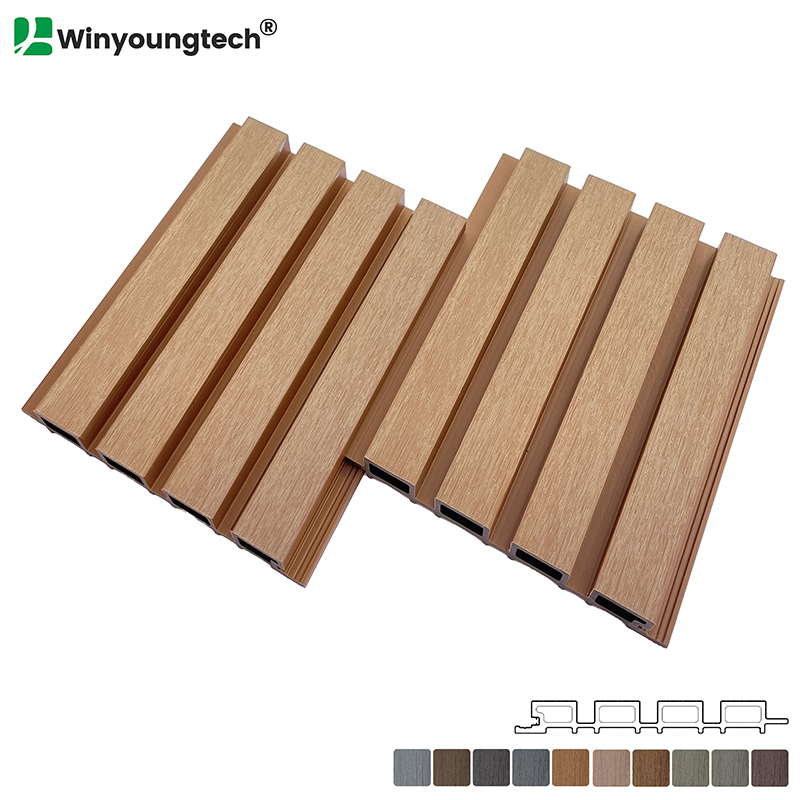
- Hollow or Fluted Boards: These weigh significantly less. They offer a highly cost-effective solution for massive commercial facades. The hollow channels aid in continuous airflow behind the panel. However, installers must use precise edge-finishing trims to hide the open ends.
- Solid Boards: These provide superior impact resistance against heavy blows. They mimic the cutting and fastening workability of real wood. Because they lack hollow air channels, they place a heavier structural load on the sub-frame battens.
Compliance and Testing Standards
You must verify rigorous testing standards before giving project approval. Check fire rating classifications first. Look for clear compliances like EN 13501-1 or ASTM E84. These documents indicate exactly how the material reacts to active flames. Next, request certified wind-load testing results. Finally, review slip and impact resistance data where applicable. These metrics prove the material can handle real-world physical stress safely.
Implementation Realities: Installation Risks and Requirements
Even premium materials fail if installed incorrectly. You must understand specific structural requirements to ensure longevity.
Composites expand and contract laterally. Extreme temperature fluctuations drive this daily movement. You must specify critical expansion gaps at all butt joints. Panel edges also require adequate breathing room. If you tightly jam boards together, they will inevitably warp or buckle under the hot summer sun.
You cannot mount these engineered boards directly to a flat exterior wall. They require a rigid, treated sub-frame system. Most professionals use specialized aluminum or pressure-treated timber battens. You must enforce strict maximum joist spacing rules. Typically, supporting battens should sit no more than 400mm apart. Exceeding this width limit causes noticeable bowing over time.
Moisture management remains absolutely paramount. You must build a continuous rain-screen system behind the panels. Air cavity minimums must be met precisely during installation. This crucial air gap prevents trapped moisture from destroying the underlying wall structure. Condensation needs a clear, unobstructed path to drain away freely.
Never drive screws straight through the front face of the board. Face-screwing restricts natural thermal movement. It also frequently voids manufacturer warranties. Instead, emphasize the use of manufacturer-approved concealed clips. These hidden stainless steel fasteners hold the boards securely to the battens. Crucially, they allow the material to slide slightly as environmental temperatures change.
Lifecycle Costs and the "Zero Maintenance" Myth
Financial planning requires looking beyond the initial purchase price. You must evaluate the long-term operational costs realistically.
Composite materials carry a higher initial premium than basic timber siding. However, the financial narrative shifts quickly after installation. Over a 10-to-25-year period, you save immensely on maintenance labor. You eliminate the need for expensive stains, exterior paints, and frequent board replacements. These massive operational savings easily offset the initial upfront expenditure.
Industry marketers love using the term "maintenance-free." We must thoroughly debunk this misleading myth. No exterior material survives outdoors forever without some basic care. You should replace that unrealistic phrase with "low maintenance." Setting accurate expectations prevents future client frustration.
The realistic ongoing requirements remain quite manageable. We recommend a simple bi-annual soft-wash cleaning routine. Use mild liquid soap and water to gently remove surface debris. You must wash away sticky seasonal pollen and heavy environmental soot. If you leave organic matter resting on the surface, mold can eventually grow on top of the dirt layer. Regular, gentle rinsing prevents this surface mold entirely.
Conclusion
Engineered panels provide an excellent exterior solution for demanding architectural designs. They fit perfectly for projects prioritizing long-term aesthetic stability. You experience very low operational disruption over the building's entire lifespan. Outdoor wall cladding simply outperforms traditional timber across multiple durability metrics.
When finalizing your procurement decisions, prioritize capped profiles. Always request physical samples before buying large volumes. You need to assess the exact texture and color density under natural daylight. Furthermore, verify all local building code compliances thoroughly. Check critical fire ratings and structural wind-load limits.
Take action today to secure your building facade. Order a comprehensive evaluation sample kit. Review the technical specification sheets alongside your engineering team. Finally, consult directly with an installation specialist. They can provide accurate structural take-offs and ensure perfect sub-frame alignment for your next big project.
FAQ
Q: Does composite wall cladding fade in the sun?
A: Yes, all materials experience an initial 10-15% lightening phase during the first few months of sun exposure. We call this weathering. However, high-quality capped composites lock in their color permanently after this initial period. Advanced UV inhibitors prevent long-term structural fading.
Q: Can outdoor wall cladding be installed over existing siding?
A: No, you should never apply these boards directly over existing siding. They require a secure sub-frame to create a continuous rain-screen. You must install battens to ensure proper ventilation and drainage. Applying them flat against a wall traps moisture and causes severe structural damage.
Q: What is the fire rating of WPC wall cladding?
A: Ratings vary significantly by manufacturer and core makeup. Standard boards are generally combustible but self-extinguishing. However, commercial-grade profiles often offer Class B or Class A fire-rating equivalents. Always verify specific laboratory testing documents like EN 13501-1 or ASTM E84 before procurement.
Q: How does extreme cold affect composite cladding?
A: Extreme sub-zero temperatures can temporarily increase the material's brittleness. The boards also contract significantly in freezing weather. Because of this thermal movement, you must allow for wider expansion gaps during winter installations. Proper spacing prevents severe buckling when the panels eventually expand during hot summer months.


